
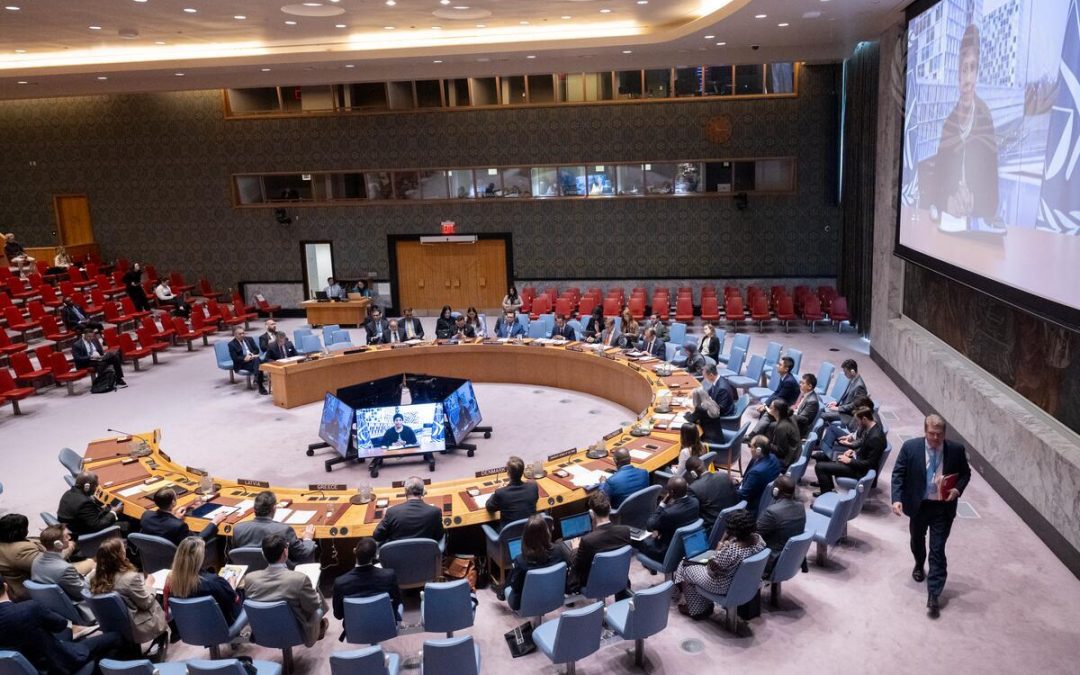
New York, 22 May 2026 — On Friday 22 May 2026, the Democratic Republic of the Congo took part in the 10,157th meeting of the Security Council, which was devoted to the situation in Libya and matters concerning the International Criminal Court.
In its statement, delivered by Ambassador Zénon Mukongo Ngay, Permanent Representative of the Democratic Republic of the Congo to the United Nations, the DRC thanked China for convening this meeting and welcomed the presentation of the International Criminal Court’s report by the Deputy Prosecutor, Ms Nazhat Shameen Khan, pursuant to Security Council Resolution 1970 (2011).
On this occasion, the DRC reaffirmed its ongoing commitment to international justice, the Rome Statute, and the principles of independence and universality of the International Criminal Court. It recalled that the ICC was established to help end impunity for the most serious crimes, including crimes against humanity, war crimes, the crime of aggression and the crime of genocide.
The Congolese delegation noted that the Prosecutor’s thirty-first report highlights significant progress in four areas of investigation: the violence of 2011, crimes committed in detention centres, crimes linked to operations between 2014 and 2020, and abuses committed against migrants.
The DRC also welcomed the Libyan authorities’ formal recognition of the Court’s jurisdiction to investigate crimes committed on Libyan territory since 2011, even though Libya is not a State Party to the Rome Statute. In like manner, it encouraged the strengthening of cooperation with Libya’s neighbouring States, in accordance with the principle of complementarity.
Regarding the recent judicial developments, the DRC took note of the ongoing national investigations and the issuance of arrest warrants by the Libyan authorities concerning the mass graves in Tarhuna. It regarded these steps as an important step towards accountability and justice for the victims and their families.
The DRC also welcomed the arrest of Khaled Mohamed Ali-El Hishri, who faces several charges of war crimes and crimes against humanity for alleged acts committed at Mitiga prison, including murder, torture, persecution, enslavement, as well as rape and other forms of sexual violence against Libyans and African migrants.
However, the DRC expressed concern at the persistent difficulties faced by the Office of the Prosecutor, including limited access to certain documents, the lack of response to requests for assistance regarding key information, and restrictions on movement.
In conclusion, the DRC made three main requests
Firstly, it called on the Libyan authorities to do everything in their power to enable the Office of the Prosecutor to carry out its mandate effectively, in accordance with Security Council Resolution 1970 (2011).
Secondly, it encouraged them to continue their cooperation with the Office of the Prosecutor, specially by granting it access to the requested documents, responding to requests for assistance regarding key information, and lifting restrictions on movement.
Thirdly, the DRC encouraged the continuation of ongoing national investigations, the issuance of arrest warrants concerning the Tarhuna mass graves, and the strengthening of cooperation with Libya’s neighbouring States, in accordance with the principle of complementarity.
For the Democratic Republic of the Congo, which recognises the irreplaceable role of justice in national reconciliation, peace, security and stability, peace and justice remain complementary.