
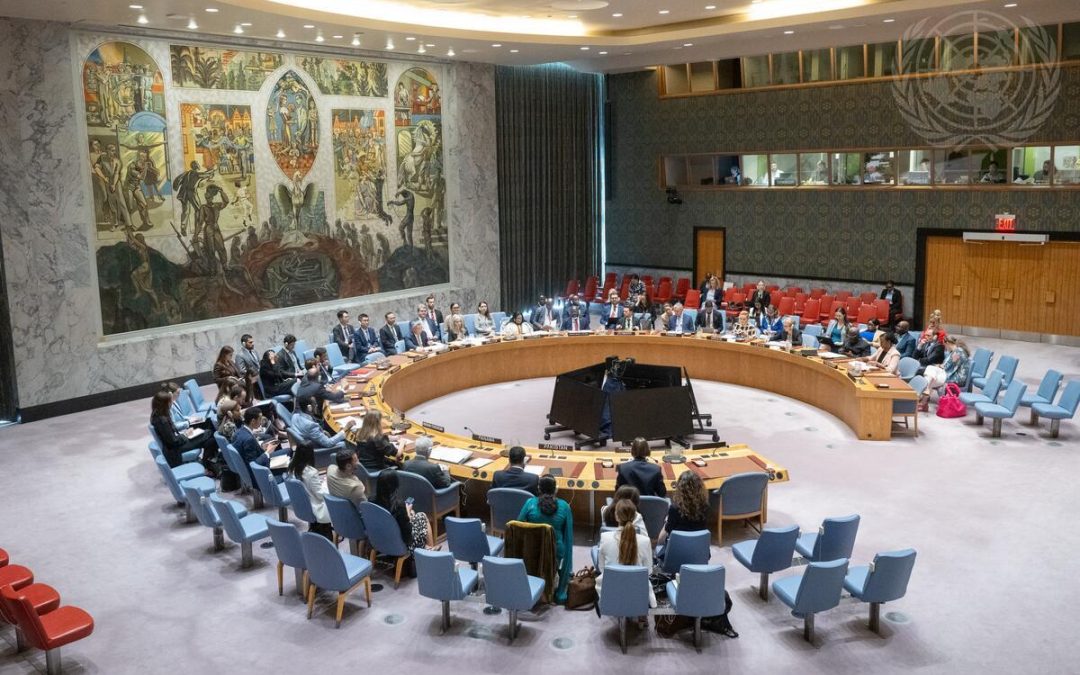
New York, May 20, 2026 — The Democratic Republic of the Congo participated on Wednesday in the Security Council’s public debate on “the protection of civilians in times of conflict,” held under the presidency of the People’s Republic of China.
The DRC’s statement was delivered by its Permanent Representative to the United Nations, Ambassador Zénon Mukongo Ngay.
In its statement, the DRC thanked China for organizing this public debate, as well as the speakers, notably Ms. Edem Wosornu and Ms. Mirjana Spoljaric, for their presentations and for the ongoing commitment of their respective institutions to populations affected by armed conflict.
The DRC noted that this debate takes place at a time when the international landscape is marked by an alarming deterioration of international peace and security, characterized by the proliferation of conflict zones, their growing interconnection, the increasing sophistication of hostilities, and the gradual blurring of the line between civilian and military spheres. In such situations, civilian populations remain the primary victims of forced displacement, indiscriminate violence, the destruction of essential infrastructure, and restrictions imposed on humanitarian action.
The Congolese delegation also emphasized that the erosion of diplomacy in favor of a logic of absolute confrontation exacerbates the vulnerability of civilians. It noted that each further escalation distances the prospects for a peaceful and lasting settlement, while undermining the collective architecture of peace and security.
Mentioning the experience of the Democratic Republic of the Congo, which has faced persistent conflicts for several decades, the DRC highlighted the serious violations of international humanitarian law committed in the eastern part of the country, particularly attacks against civilians, sites housing displaced persons, and essential infrastructure. It stressed that MONUSCO’s experience illustrates both the importance and the limitations of international protection mechanisms when they are not accompanied by sustainable strengthening of national capacities, addressing the root causes of conflict, and a consistent political commitment to peace.
For the DRC, the protection of civilians cannot be reduced to a strictly security-based response. It must be part of an integrated approach that combines security, development, justice, peacebuilding, political dialogue, and conflict prevention.
In conclusion, the Democratic Republic of the Congo reaffirmed its commitment to international humanitarian law and the principles enshrined in the United Nations Charter. It called on all parties to armed conflicts to break with any logic of escalation, to scrupulously respect their international obligations, to guarantee safe, rapid, and unimpeded humanitarian access, and to ensure the effective protection of civilians, medical personnel, and humanitarian workers.
The DRC also emphasized three key priorities: first, the need for the Security Council and international partners to ensure that mandates, resources, and support for national capacity-building are clearly defined, coordinated, and adapted to the realities on the ground; second, the importance of sustainable investments in peacebuilding, development, and addressing the root causes of conflict; third, the need for support to national authorities as part of a coherent political strategy that coordinates efforts at the local, national, regional, and international levels to promote peace, preserve state sovereignty, and support the effective enforcement of ceasefire commitments.