
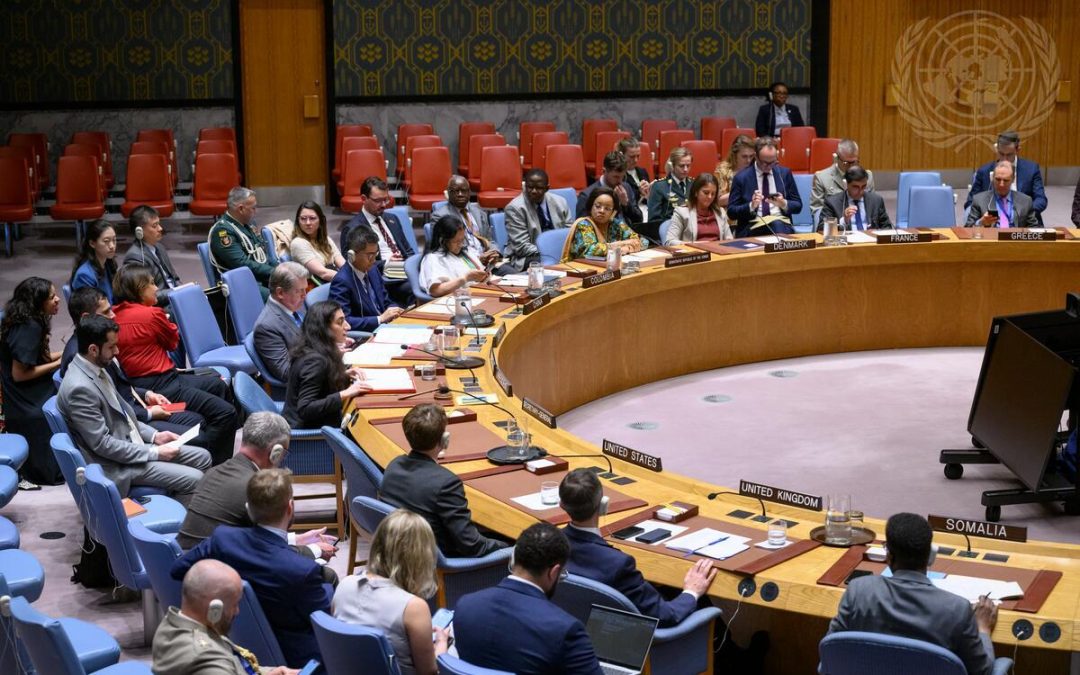
New York, 15 April 2026 – The Democratic Republic of the Congo reaffirmed before the United Nations Security Council on Wednesday that the lasting effectiveness of peace operations can only be ensured when they are anchored in a credible political process, respond to the expectations of populations, and adapt to the constant evolution of threats and crisis environments.
Speaking at the 10137th meeting devoted to United Nations peacekeeping operations, the DRC’s Deputy Permanent Representative, H.E. Ms. Jocelyne Kabengele Lukundula, paid tribute to the commitment of peacekeepers and stressed that peace operations remain essential instruments for the maintenance of international peace and security, provided that they are backed by credible political processes, the consent of host States, and predictable, adequate and sustainable resources.
The Congolese delegation made three main observations. First, it welcomed MINUSCA’s efforts in supporting the security of elections in the Central African Republic, while recalling the persistence of structural fragilities. Second, it expressed concern over the difficulties faced by UNISFA in implementing its mandate in Abyei, against a backdrop of political deterioration and the absence of sustained dialogue between Sudan and South Sudan. Third, the DRC noted that the current doctrinal shift toward lighter, more agile and modular missions must be accompanied by strategic clarity regarding their objectives and conditions for success.
The DRC also underscored the relevance of greater integration of technological tools into peace operations, referring in particular to MONUSCO’s use of drones to monitor armed groups in the Democratic Republic of the Congo. For Kinshasa, however, these operational adjustments, necessary as they may be, cannot replace the primacy of politics, which must remain the guiding principle of any peace operation.
In conclusion, the Democratic Republic of the Congo stressed that, particularly in African contexts, the relevance of peace operations should not be assessed solely by their capacity to deploy, but by their ability to support negotiated political solutions, build trust and adapt to constantly evolving security environments. Only under these conditions, the Congolese delegation emphasized, will they continue to serve as a central pillar of the collective peace and security architecture.