
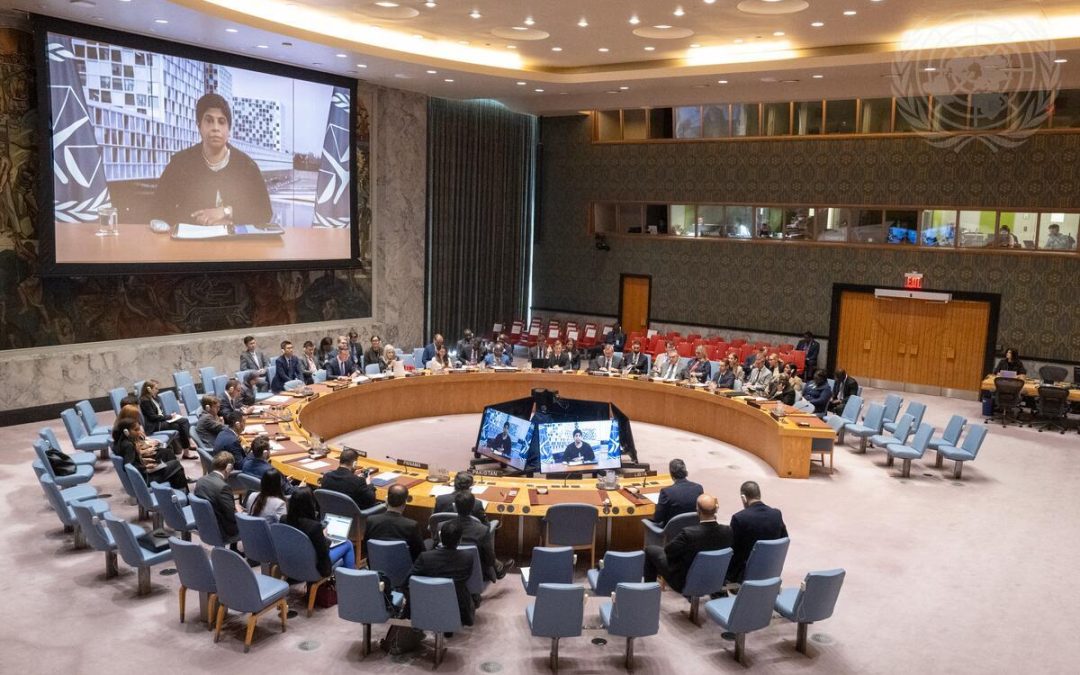
On 22 May 2026, the Democratic Republic of the Congo took part in the Security Council meeting on the situation in Libya and matters relating to the International Criminal Court. In its statement, the DRC reaffirmed its commitment to international justice, the independence of the ICC and the fight against impunity.
The DRC welcomed the progress made by the Office of the Prosecutor, whilst calling on the Libyan authorities to strengthen their cooperation with the Court. In conclusion, it made three main requests: to allow the Office of the Prosecutor to fully carry out its mandate; to guarantee it access to documents and key information and to facilitate its mobility; and to continue national investigations, particularly into the mass graves in Tarhuna, in cooperation with Libya’s neighbouring states.
Below is the full statement of the Democratic Republic of the Congo, delivered by Ambassador Zénon Mukongo Ngay, Permanent Representative of the DRC to the United Nations.
——————————————————————————————————————————————————–
Mr President,
The Democratic Republic of the Congo thanks China for convening this meeting to consider the report of the International Criminal Court on Libya.
My delegation welcomes Deputy Prosecutor Ms Nazhat Shameen Khan and thanks her for the presentation of the report, which she has just delivered, pursuant to Security Council Resolution 1970 (2011), which referred the situation in Libya to the Prosecutor of the International Criminal Court.
The Democratic Republic of the Congo takes this opportunity to reaffirm its unwavering commitment to international justice, and more specifically to the Rome Statute. It reiterates its commitment to upholding the principles of the independence and universality of the International Criminal Court, a court established precisely to put an end to impunity for the most serious crimes, such as crimes against humanity, war crimes, crimes of aggression and the crime of genocide.
That is why the provisions of the Rome Statute, which for some are merely a theoretical concept, are a reality that affected populations—particularly those in regions of the world plagued by violence and instability—endure daily.
Wars and all forms of violence, which deny the dignity and sanctity of the human being, have no nationality. This inescapable reality concerns us all, and cooperation with the International Criminal Court must form the foundation of our response.
Mr President,
My delegation notes that the Court’s Prosecutor’s thirty-first report placed particular emphasis on the assessment of progress made, the difficulties encountered and the achievements to date. It takes stock of significant progress in four main areas of investigation: the violence of 2011, crimes in detention centres, crimes linked to operations from 2014 to 2020, and abuses committed against migrants.
With regard to cooperation with the Court, the Democratic Republic of the Congo, the first State Party to have established meaningful cooperation with the ICC, commends the Libyan authorities because, although Libya is not a State Party to the Rome Statute, the country has formally recognised the Court’s authority to investigate crimes committed on its territory since 2011.
In line with this, my country encourages the strengthening of cooperation with Libya’s neighbouring States to support the compilation of additional case files and the initiation of new cases, both at the national and international levels, in accordance with the principle of complementarity.
The Democratic Republic of the Congo takes note of the ongoing national investigations and the issuance of arrest warrants by the Libyan authorities concerning the mass graves in Tarhuna, which represent a crucial step towards accountability and justice for the victims and their families.
With regard to the progress made, the Democratic Republic of the Congo notes with satisfaction that in paragraph 9 of the report, the Office of the Prosecutor reports the arrest of KHALED MOHAMED ALI-EL HISHRI, who faces 17 charges of war crimes and crimes against humanity for acts allegedly committed at MITIGA prison, including murder, torture, persecution, enslavement, as well as rape and other acts of sexual violence against Libyan women and men, as well as African migrants, between 2014 and 2020.
We welcome this stage in the legal proceedings against MOHAMED ALI-EL HISHRI and reiterate our call to end impunity in Libya. My delegation expresses the hope that the authorities will cooperate more closely with the Office of the Prosecutor to conduct fair and impartial investigations and prosecutions against all alleged perpetrators, regardless of their power and influence.
The Democratic Republic of the Congo recalls that, on 15 February 2011, the Security Council, by its Resolution 1970 (2011), referred the situation in Libya to the Prosecutor of the International Criminal Court.To date, more than 15 years later, the Office has reached a significant milestone: for the first time, a suspect has been surrendered to the International Criminal Court in relation to the situation in Libya, and preliminary proceedings have been initiated since the Council’s referral of the situation in 2011.
These are encouraging developments, likely to help put an end to impunity and bring justice to all victims, despite the signs of structural dysfunction and fragmentation observed within the judicial institutions in the eastern and western regions of the country, as noted in paragraph 20 of the same report.
Mr President,
The Democratic Republic of the Congo notes with satisfaction the significant progress made, as mentioned in paragraph 69, point 1, of the report, which refers to the Libyan Government’s declaration accepting the jurisdiction of the International Criminal Court pursuant to Article 12(3) of the Rome Statute. This decision is clear evidence of the Libyan authorities’ commitment to justice and the establishment of accountability in Libya.
Furthermore, my delegation calls on the Libyan Government to cooperate actively with the Office of the Prosecutor to enable the execution of arrest warrants issued against suspects of the International Criminal Court present on its territory. The support of the Libyan authorities remains essential to ensure that the perpetrators of crimes are brought to justice.
Mr President,
Notwithstanding the progress described above, it should be noted that during the period under review and in the course of its activities, the Office nevertheless encountered certain challenges related to a lack of cooperation from the Libyan side, notably limited access to a number of documents, a lack of response to certain requests for assistance regarding key information, as well as mobility constraints.
As a country that has experienced the irreplaceable role of justice as a factor in social harmony, national reconciliation, peace, security and stability, the Democratic Republic of the Congo is convinced that peace and justice are complementary.
In conclusion, my delegation would like to make three requests:
- It calls on the Libyan authorities to do everything in their power to enable the Office of the Prosecutor to carry out its mandate effectively, in accordance with Security Council resolution 1970 (2011).
- It encourages them to continue their cooperation with the Office of the Prosecutor, by granting it access to the requested documents and by responding to requests for assistance regarding key information, as well as addressing mobility constraints.
- It encourages the continuation of ongoing national investigations and the issuance of arrest warrants by the Libyan authorities concerning the mass graves in Tarhuna, as well as the strengthening of cooperation with Libya’s neighbouring states in accordance with the principle of complementarity, which represents a crucial step towards accountability and justice for the victims and their families.
Thank you.